
I still remember holding my first big camera. My hands shook a little. It felt heavy. I looked at all those buttons and felt lost. A good friend smiled and said, “First, let me tell you what does dslr camera stands for.” That one simple question changed everything for me. It turned fear into curiosity. Today, I want to be that friend for you. I want to share what I learned in the simplest way possible. By the end of our chat, you will know exactly what those four letters mean. More importantly, you will feel ready to pick up a camera with confidence.
What Does a DSLR Camera Stand For? (Detailed Breakdown Section)
Let me walk you through this like we’re sitting down with a coffee, looking at my old camera together. Trust me, it’s simpler than it sounds.
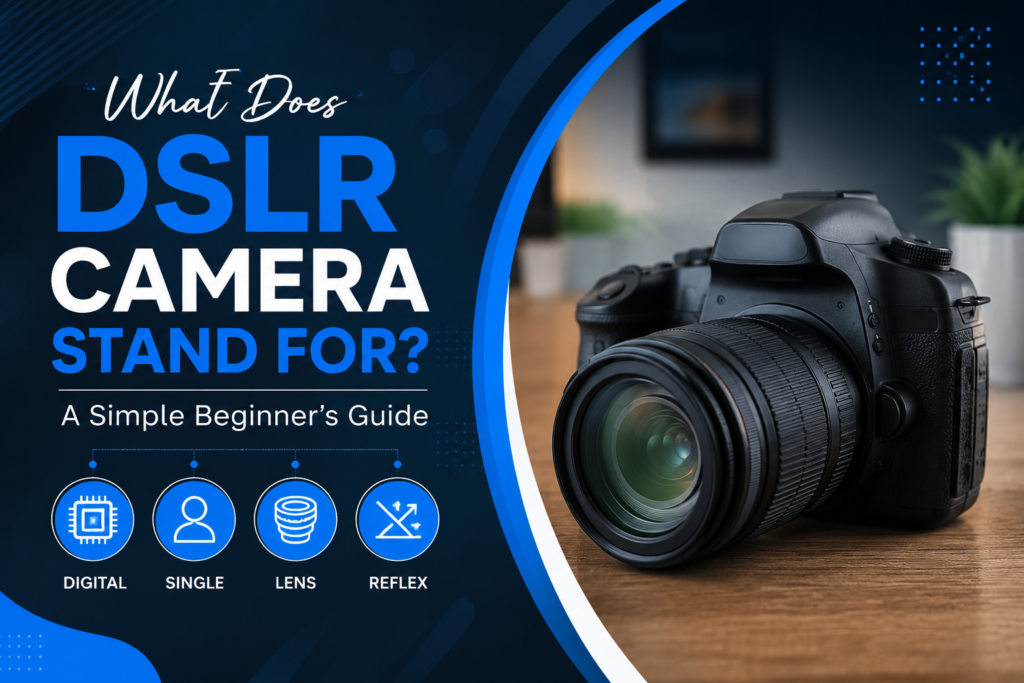
Breaking Down the Acronym
Digital; This part is easy. It means your camera stores photos on a memory card instead of film. Just like your phone, but way more powerful. You can take hundreds of shots, delete the bad ones, and keep shooting without buying new film.
Single: This means one lens does all the work. You look through the same lens that takes the picture. No separate viewfinder window like old rangefinder cameras. What you see is exactly what you get.
Lens: The glass piece that lets light into your camera. The beauty of a DSLR is that you can swap lenses. Want to zoom far? Use a telephoto lens. Want wide shots? Use a wide-angle lens. This flexibility is why interchangeable lenses matter so much.
Reflex: This is the coolest part. Inside your camera, there’s a mirror that reflects light up into your eye. When you press the shutter button, that mirror flips up, and light hits the sensor instead. That’s the “reflex” action of the mirror moving.
Simple Real-World Explanation
Think of it like this. You’re looking through a window (the lens). A mirror inside shows you exactly what’s outside. When you take a photo, the mirror moves out of the way, and the light hits a digital sensor instead. That’s literally it.
What Does DSLR Mean in Photography?
Now, let’s talk about what does dslr stand for in photography — because it’s more than just letters. It’s about how you see your shot before you take it.
Optical Viewfinder Explanation

When you look through a DSLR viewfinder, you’re seeing a real, live view through the lens. No electronic screen. No delay. Just pure light bouncing off mirrors. This optical viewfinder gives you a bright, clear preview of your exact shot.
I remember my first time looking through one. I was shocked. It felt like I was looking directly at the world, not a screen. That clarity made me fall in love with photography instantly.
How Light Travels Inside the Camera

Here’s the journey of light in simple steps:
- Light enters through the lens
- It hits a mirror inside the camera body
- The mirror reflects it upward into the viewfinder
- You see the exact image through the glass
- When you press the shutter, the mirror flips up
- Light hits the sensor directly
- Your photo is saved digitally
This whole process happens in milliseconds. But the mirror mechanism is what makes a DSLR special. It’s also the biggest difference between DSLR and SLR — one uses digital sensors, the other uses film.
Why Photographers Prefer This System

Photographers love DSLRs because what you see is truly what you get. There’s no lag, no battery drain from an electronic viewfinder, and no guesswork. The optical viewfinder shows real colors, real light, and real depth. It’s honest.
Plus, with photography equipment like fast autofocus and durable bodies, DSLRs handle rough conditions beautifully. Many professionals still carry them because they simply work, every time.
And here’s a little secret. Once you understand this mirror system, every photo you take makes more sense. You’ll appreciate the craft behind each shot. That understanding is what separates casual shooters from serious photographers.
How a DSLR Camera Actually Works (Step-by-Step)
Now comes the fun part: let’s peek inside that magic box. I remember the first time someone explained this to me; it felt like learning a secret handshake. Once you know how your camera thinks, you’ll never shoot the same way again.
Step 1: Light Enters Through the Lens

Light bounces off your subject and travels straight into the lens. The glass elements inside focus that light into a crisp image. Think of the lens as a funnel, gathering all that visual information and directing it inward.
Step 2: Mirror Reflects the Image Upward

Inside the camera body sits a mirror at a 45-degree angle. This mirror catches the incoming light and reflects it upward. This is the “reflex” action we talked about earlier. The mirror is the reason you can see your subject clearly before shooting.
Step 3: Viewfinder Shows Real-Time Preview

The reflected light lands in your optical viewfinder. You see a bright, clear, real-time image of exactly what the lens sees. No delay. No digital guesswork. Just pure light showing you the truth.
I’ll never forget the first time I looked through a viewfinder and realized I was seeing the world through glass and mirrors. It felt like magic, but it’s pure physics.
Step 4: Shutter Opens

When you press the shutter button, two things happen in rapid succession. The mirror flips up out of the way, and the shutter curtain opens. This exposes the sensor to light for a fraction of a second or longer, depending on your settings.
Step 5: Sensor Captures the Image

Light hits the digital sensor, which converts photons into electrical signals. The sensor acts like a digital canvas, recording colors, shadows, and highlights with incredible detail. Bigger sensors capture more light, which means better image quality.
Step 6: Image Is Saved Digitally

Finally, the camera processes that data and saves it as a digital file on your memory card. You can instantly review your shot on the LCD screen, transfer it to your phone, or edit it on your computer.
Key Features That Make DSLR Cameras Popular

Now let’s talk about why people still love DSLRs. Even in 2026, they are not outdated. There is a reason they are trusted tools in serious photography equipment kits. I’ve used many cameras over the years, and these features always stand out.
Large Image Sensors

This is a big one. DSLR cameras often have large image sensors. A larger sensor captures more light. More light means better detail, richer color, and cleaner images in low light.
I remember shooting at a family event in a dim room. My friend’s phone photos looked grainy. My DSLR shots looked clear and sharp. That difference came from the sensor. Bigger sensors simply handle light better.
Manual Exposure Control

A DSLR gives you full control. You can adjust ISO, shutter speed, and aperture yourself. This is where real learning begins.
When you move from auto mode to manual, everything changes. You stop guessing. You start creating. That control lets you shape light like an artist shapes clay.
Fast Autofocus

Speed matters. Kids move fast. Pets move faster. A good DSLR locks focus quickly and tracks motion well.
I once tried to capture a bird taking off. My DSLR caught it mid-air, wings spread wide. That fast autofocus made the difference between a blurry mess and a stunning shot.
Optical Viewfinder
This is part of what a dslr camera stands for in action. The optical viewfinder shows real light through the lens. There is no screen lag. No delay.
It feels natural. Honest. What you see is exactly what the lens sees. That direct connection helps you time your shot perfectly.
Lens Flexibility
One of the biggest strengths of DSLR cameras is lens flexibility. You can swap lenses depending on what you shoot. Wide lens for landscapes. Telephoto for wildlife. Prime lens for portraits.
This flexibility is powerful. It means your camera grows with you. As your skills improve, your lens choices expand. That is why interchangeable lenses are such a key part of serious photography.
DSLR vs Mirrorless: Which One Should You Choose in 2026?
This is the big debate right now. DSLR or mirrorless? I get this question from almost every beginner. And honestly, the answer depends on you. Let’s break it down in simple terms.
Size & Portability
Mirrorless cameras are smaller and lighter. They remove the mirror inside, so the body becomes more compact. If you travel a lot or want something easy to carry, mirrorless feels convenient.
DSLRs are a bit bigger. But that larger grip often feels more stable in your hands. I actually like that solid feel during long shoots. It balances well, especially with bigger lenses.
Battery Life
Here is something many people forget. DSLRs usually have better battery life. Because they use an optical viewfinder instead of an electronic screen, they save power.
Mirrorless cameras rely heavily on electronic displays. That drains batteries faster. If you shoot events or long sessions, DSLR often lasts longer without swapping batteries.
Autofocus Performance
Mirrorless cameras have become very strong in autofocus, especially for eye tracking and video. They are fast and smart.
But modern DSLRs are no slouch. They still deliver reliable and accurate autofocus for sports, wildlife, and portraits. For most beginners, both systems will perform very well.
Video Capability
Mirrorless cameras often lead in video features. Many offer advanced video modes and lighter setups for creators.
That said, many DSLRs also shoot excellent video. If your main focus is photography, DSLR still shine. If you plan to focus heavily on video content, mirrorless might have an edge.
Price Comparison
DSLRs can be more affordable, especially entry-level models. Since mirrorless is newer technology, some models cost more.
You can often find a great beginner DSLR kit at a reasonable price. That makes it attractive for students or hobbyists starting out.
DSLR for Beginners: What You Should Know
If you are just starting, take a deep breath. I know that first day with a DSLR can feel scary. So many buttons. So many numbers. But here is the truth: once you understand what does dslr camera stands for and how it works, the fear fades. It becomes exciting instead.
Learning Manual Mode
Most beginners stay in auto mode. I did too. It feels safe. The camera makes all the choices for you. But real growth begins when you switch to manual or semi-manual modes.
Manual mode teaches you how light works. You begin to control brightness, motion, and depth. It feels confusing at first. Then one day it clicks. That “aha” moment is powerful. You stop taking random photos. You start creating images on purpose.
Understanding ISO, Aperture, and Shutter Speed
These three settings are the heart of photography. Think of them as a team.
ISO controls light sensitivity. Higher ISO makes the image brighter but can add grain.
Aperture controls how much light enters through the lens. It also affects background blur.
Shutter speed controls motion. Fast shutter freezes action. Slow shutter shows motion.
When you understand this trio, everything changes. That is why learning basic dslr camera settings for beginners is so important. Once you practice these settings, you gain real control. You are no longer guessing. You are deciding.
I always tell my students to experiment. Take the same photo with different settings. Compare the results. That simple habit teaches more than hours of theory.
Why DSLR Helps Build Photography Skills
A DSLR forces you to learn. And that is a good thing. Because it shows real light through the optical viewfinder, you see exposure changes clearly. Because it offers manual control, you can test ideas quickly.
The larger sensor also helps you understand depth of field better. You can create soft, blurry backgrounds that separate your subject. That visual feedback trains your eye.
Over time, your confidence grows. You start to predict how a setting will change the image. That skill transfers to any camera you use in the future.
I have seen many beginners grow fast with a DSLR. Within months, their photos look sharper, cleaner, and more intentional. Not because the camera is magic. But because it teaches the fundamentals.
If you are serious about learning photography, a DSLR is like a patient teacher. It may feel complex at first. But it rewards curiosity and practice. And once you understand it, you will never look at light the same way again.
Lifespan and Maintenance of a DSLR Camera
Let’s talk about something people rarely think about at first. How long will your camera last? It’s a fair question. In fact, one of the most common things beginners ask me is, how long do dslr cameras last?
The honest answer is this: a good DSLR can last many years. Most entry-level models are rated for around 100,000 shutter clicks. Mid-range and professional bodies can go 150,000 to 300,000 clicks or more. That means you can take thousands of photos every month for years before hitting that limit.
Average Shutter Count
Inside your DSLR is a mechanical shutter. Every time you press the button, it opens and closes. That action counts as one click.
Think of it like the mileage on a car. The higher the shutter count, the more the camera has been used. But just like a car, proper care makes a huge difference. I’ve seen well-maintained cameras perform beautifully even after heavy use.
If you shoot casually, your DSLR could easily last five to ten years. Many hobbyists never reach the shutter limit at all.
Proper Storage
Cameras hate two things: moisture and dust. Keep your DSLR in a dry place. Use a padded camera bag. If you live in a humid area, a small dry box or silica gel packs can protect the internal parts.
I once left my camera in a damp room during monsoon season. Big mistake. Tiny moisture spots formed inside the lens. Since then, I always store my gear carefully. A little prevention saves a lot of money.
Also, avoid extreme heat. Don’t leave your camera in a hot car. High temperatures can damage the sensor and battery over time.
Importance of Regular Servicing
Just like a car needs servicing, your DSLR benefits from occasional check-ups. Professional cleaning keeps the sensor and mirror system in good shape. It also ensures autofocus and buttons work smoothly.
If you shoot often, consider servicing once a year. If you shoot casually, every couple of years is usually enough.
Basic maintenance at home also helps. Keep the lens clean. Change lenses carefully to reduce dust. Turn off the camera before removing batteries or memory cards.
Signs Your DSLR Is Aging
Over time, you may notice small changes. Slower autofocus. Sticky buttons. Strange noises from the shutter. These are early signs of wear.
Dead pixels on the sensor can also appear after years of use. Minor issues are normal. Many can be fixed with simple servicing.
The key thing to remember is this: DSLRs are built tough. They are designed for real-world photography. With proper care, they stay reliable for a long time.
I still have my first DSLR. It has scratches on the body and stories behind every dent. But it works. Every time I pick it up, it reminds me that good tools last when you treat them well.
If you understand what does dslr camera stand for and how it works, you’ll also understand how to protect it. And when you take care of your camera, it takes care of your memories.
Cleaning and Care Guide
Let me tell you something I learned the hard way. Dust is sneaky. You may not see it at first. But one day, you zoom into your photo and spot tiny dark marks in the sky. That is when you realize cleaning matters.
Why Sensor Cleaning Matters
Inside your DSLR sits the image sensor. It is the heart of your camera. If dust lands on it, you will see small spots in bright areas like skies or walls.
This does not mean your camera is broken. It just means it needs care. Clean gear gives clean images. Simple as that.
I once ignored small dust spots for weeks. I thought editing would fix it. It became annoying fast. Since then, I take sensor cleaning seriously.
Safe Cleaning Methods
First rule: be gentle. Never touch the sensor with your fingers. Always turn off the camera before cleaning.
Start simple. Use a manual air blower. Point the camera downward. Gently blow air inside the body to remove loose dust. This solves many small problems.
If dust remains, you may need a sensor cleaning kit. These come with special swabs made for delicate surfaces. If you are unsure how to clean a DSLR camera sensor safely, watch trusted tutorials or read your camera manual before trying.
Move slowly. Use light pressure. The sensor is strong, but it deserves respect.
When to Visit a Professional
Sometimes, it is better to let an expert handle it. If you see stubborn stains or feel nervous about cleaning, take your camera to a service center.
Professional cleaning is not very expensive. And it protects your investment. I still send my main camera for deep cleaning once a year.
Good care keeps your DSLR working like new. And when you understand what does dslr camera stand for and how the mirror system works, you also understand why keeping the inside clean matters.
A clean camera is like a clean window. The clearer the glass, the better the view. And better view means better photos.
Choosing the Right DSLR for Your Needs
Now comes the exciting part. You understand what a dslr camera stands for. You know how it works. So how do you choose the right one?
I remember standing in a camera store, staring at rows of bodies and lenses. I felt overwhelmed. But here’s what I learned. Choosing a DSLR is not about buying the most expensive one. It is about buying the right one for you.
Budget Considerations
Start with your budget. Be honest with yourself. You do not need a professional camera to learn photography.
Entry-level DSLRs are powerful today. They offer great image quality, strong autofocus, and full manual control. They are perfect for learning. Save some money for a good lens instead. Lenses often matter more than the camera body.
Entry-Level vs Professional
Entry-level cameras are lighter and easier to use. They guide you with helpful menus and beginner modes. If you are just starting, this is usually the smart choice.
Professional models are built tougher. They have stronger bodies, higher shutter life, and more advanced controls. They are great for sports, wildlife, or paid work. But they can feel complex for a beginner.
Think of it like learning to drive. You do not start with a race car. You start with something simple and reliable.
Brand Comparison (Canon, Nikon, and Others)
Canon and Nikon are two of the biggest names. Both make excellent DSLRs. Both have wide lens options. You cannot go wrong with either.
Some people prefer Canon colors. Others like Nikon handling. The best advice I can give is this: hold the camera in your hand. See how it feels. Comfort matters more than brand loyalty.
There are also other brands, but Canon and Nikon still dominate the DSLR space. They offer strong support, service centers, and lens choices.
Important Features Before Buying
Look for these basics:
- Good sensor size (APS-C is great for beginners)
- Decent autofocus system
- Comfortable grip
- Easy menu system
- Availability of lenses
Also think about what you want to shoot. Portraits? Landscapes? Wildlife? Your subject may guide your choice.
If you are unsure where to begin, search for the best dslr camera for beginners within your budget. Read reviews. Watch real-world tests. Compare sample images.
But remember something important. The camera does not make the photographer. You do. A beginner DSLR in skilled hands can create stunning work.
When I bought my first DSLR, it was not top-of-the-line. But it taught me everything. It helped me understand light, timing, and composition. That mattered more than brand or price.
So choose wisely. Choose comfortably. And most of all, choose the camera that makes you excited to go out and shoot.
Because once you truly understand what does dslr camera stand for and how it fits your goals, the right choice becomes much clearer.
Essential Accessories for Better Photography
Let me share something I wish I knew earlier. A camera alone is powerful. But the right accessories make it unstoppable. Once you understand what does dslr camera stand for and how it works, you start to see how small tools can improve big results.
You do not need everything at once. Start simple. Add tools as you grow. Each accessory solves a real problem in photography.
Tripod
A tripod is one of the most useful tools you can own. It keeps your camera steady. That means sharper photos, especially in low light.
I remember trying to shoot a sunset by hand. My images came out blurry. The next day, I used a tripod. The difference was night and day. Crisp details. Rich colors. Clean lines.
Tripods also help with long exposures, landscapes, and group photos. They give you control and stability.
Extra Batteries
Nothing hurts more than a dead battery at the perfect moment. Trust me. It has happened to me.
DSLR cameras have good battery life. But events, travel, and cold weather drain power faster. Carry at least one spare battery in your bag.
This small habit saves stress. You stay ready. You stay confident. And you never miss a memory.
Memory Cards
Memory cards are your storage. Without them, your camera cannot save images. Always carry extra cards.
Choose reliable brands. Faster cards help when shooting action or video. They reduce buffering time and improve performance.
I like to rotate cards during big shoots. That way, if one fails, I do not lose everything. It is a simple safety trick.
Camera Bag
A good camera bag protects your gear from dust, rain, and impact. It also keeps everything organized.
When I started, I used a normal backpack. Bad idea. My lenses scratched each other. Later, I bought a padded camera bag. Everything had its place.
Protection matters. DSLRs are strong, but they are still precision tools. A good bag extends their life.
External Flash
Light changes everything in photography. Sometimes natural light is not enough. That is where an external flash helps.
Built-in flashes are small and harsh. An external flash gives better control. You can bounce light off ceilings or walls. This creates softer, more natural results.
I once shot a birthday party indoors. Without an external flash, faces looked dark. With a bounce flash, the room felt warm and alive. The difference was huge.
FAQs
In most cases, yes. A DSLR has a larger sensor, better lenses, and more manual control than a smartphone. This means sharper images, better low‑light performance, and more background blur. Phones are convenient, but DSLRs offer higher image quality and creative freedom for serious photography.
No, DSLRs are not outdated. While mirrorless cameras are growing fast, DSLRs are still powerful and reliable. Many professionals still use them for sports, wildlife, and events. They offer strong battery life, durable bodies, and optical viewfinders that many photographers love.
Yes, many DSLR cameras shoot high‑quality video. They can record in Full HD or even 4K, depending on the model. However, mirrorless cameras often offer more advanced video features. If your main focus is photography with occasional video, a DSLR is still a solid choice.
Professionals use DSLRs because they are dependable, tough, and deliver consistent image quality. The optical viewfinder shows real light without delay. The battery lasts long. The autofocus is fast and accurate. For demanding jobs, reliability matters as much as image quality.
Canon and Nikon are widely trusted DSLR brands. Both offer durable bodies, strong lens systems, and global support. Reliability often depends more on the specific model and how well you maintain it. Choosing a reputable brand with good service options is always a smart move.
Conclusion
So, what does a dslr camera stand for? It stands for Digital Single Lens Reflex, a camera that uses one lens and a mirror system to show you real light before capturing it with a digital sensor.
Even in 2026, DSLRs remain powerful, reliable, and perfect for learning photography. They teach you how light, focus, and exposure truly work. If you’re serious about improving your skills, a DSLR can be an amazing teacher. Pick it up, practice often, and let your creativity grow.